
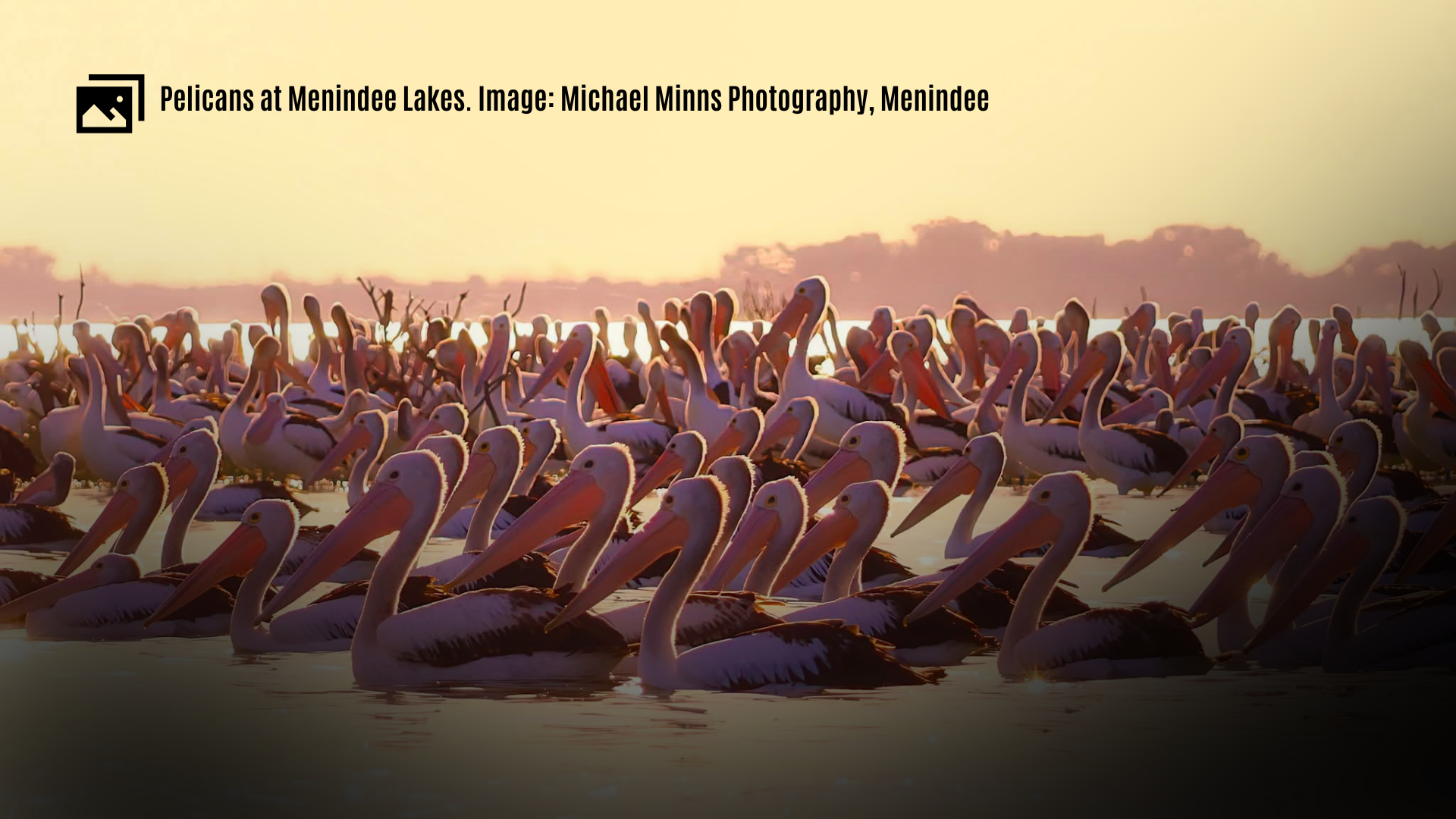
Laboratory testing has found no evidence of H5 bird flu in about 400 dead pelican chicks and juvenile birds discovered at Lake Cawndilla near Menindee.
The birds were found on August 7, prompting investigations and testing by NSW authorities amid heightened concern over avian influenza detections elsewhere in the state.
In a community update issued on Monday, August 10, the NSW Department of Climate Change, Energy, the Environment and Water said all samples taken from the dead pelicans had tested negative for H5 avian influenza. The update did not identify another cause for the deaths.
Authorities are continuing to ask residents and visitors across the region to report unusual wildlife events, including groups of dead birds in new locations, sick birds or significant increases in bird deaths.
People have also been warned not to handle sick or dead wildlife.
There are currently four confirmed H5 avian influenza detections in NSW. Two involve migratory giant petrels found near Hawks Nest, while two Greater Crested Terns have tested positive — one near Narooma on the South Coast and another near Wentworth in western NSW.
The Wentworth detection has placed the issue particularly close to Far West communities and the Lower Darling-Baaka system.
The NSW Government says its response is focused on early detection, coordinated action, industry preparedness and protection of native wildlife.
Anyone who sees sick or dead wild birds, domestic birds, marine mammals or other wildlife showing possible signs of H5 bird flu is being asked not to touch the animals, to record what they see and report the incident through the relevant online reporting system or the Emergency Animal Disease Hotline on 1800 675 888.
Reports are assessed by officers from the NSW Department of Primary Industries and Regional Development, with some cases leading to follow-up enquiries or collection of birds for testing.
Algae alerts remain across Lower Darling
The latest community update also shows a number of blue-green algae alerts remain in place throughout the Menindee Lakes and Lower Darling-Baaka system.
Red alerts are current at Ellerslie and Sunset Strip, with Sunset Strip upgraded from green since the previous update.
Amber alerts apply at Copi Hollow, Lake Pamamaroo Outlet, all Lake Wetherell sites including Lake Tandure, Darling River at Weir 32, Pooncarie, Tapio, Tolarno and Burtundy.
Lake Menindee Outlet, Lake Cawndilla Outlet and Wilcannia are also listed at amber alert level.
The Darling River Pumping Station at Menindee township remains on a green alert.
Further inflows expected
The department’s August 6 inflow forecast indicated another 5 to 10 gigalitres of water was expected to reach Menindee Lakes by the end of September.
However, the northern catchment has recently experienced minimal rainfall and flows from northern tributaries remain low.
At the time of the update, flows were decreasing at Wilcannia, where discharge was recorded at 263 megalitres per day, while Bourke was discharging 269 megalitres per day.
Residents and landholders are encouraged to monitor WaterNSW algae alerts and report fish deaths, fish struggling or gasping at the surface, or crayfish leaving the water to the NSW Fisheries reporting line on 1800 043 536.